
This project started in 2023 as a tonearm engineering puzzle to figure out how to dynamically calibrate stylus azimuth on the record groove level with correct and stable geometry while the record is playing.
This blog chronicles the project’s progress, prototype fabrication, and functional enhancements leading to a new tonearm innovation for the audio community.
So, why is dynamic azimuth so important?
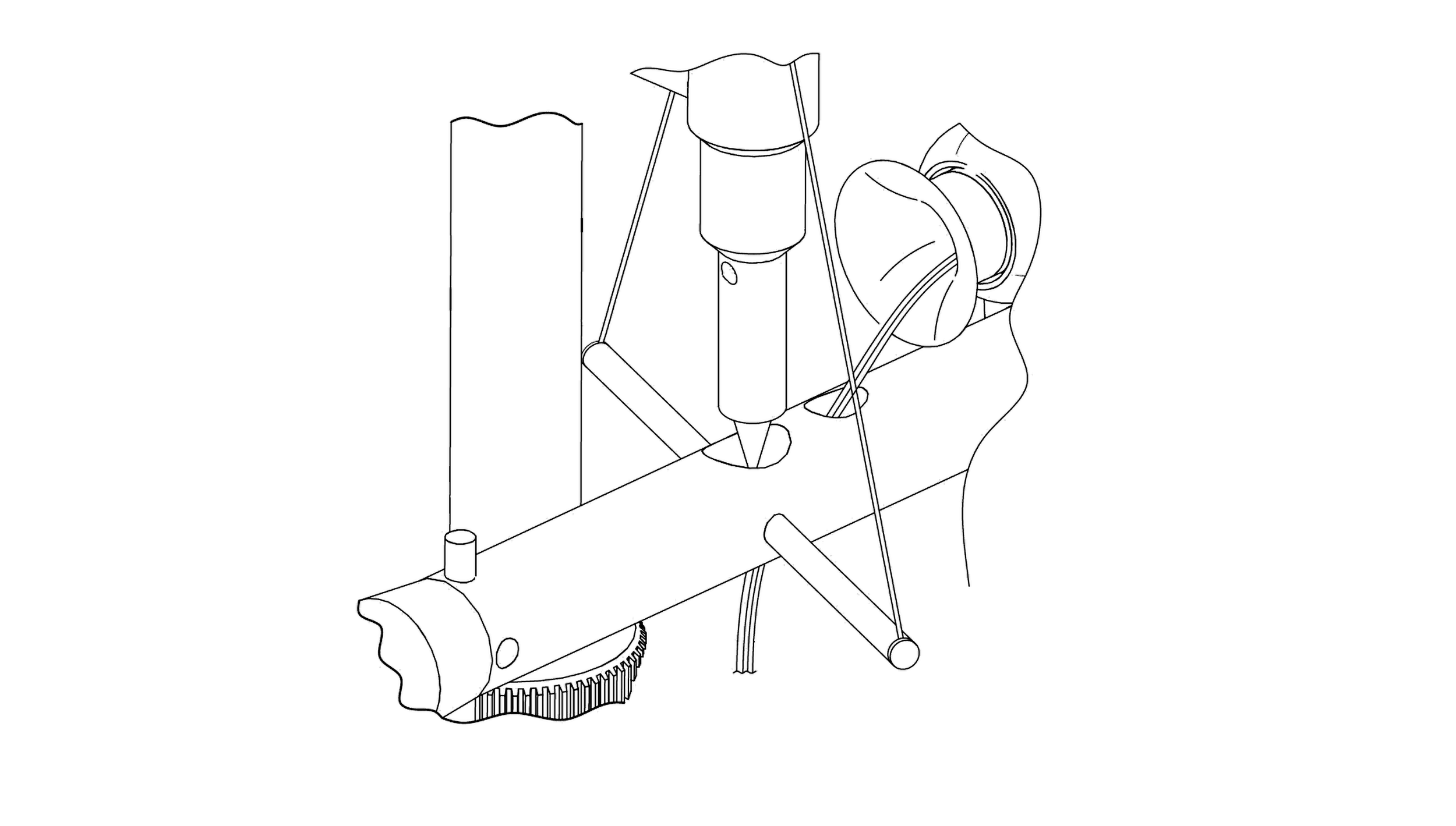
Modern stylus profiles are a lot more sophisticated compared to 40 years ago. These newer profiles require very precise alignments to position the needle in the groove to deliver maximum performance - if not properly aligned, it’s like a driving race car with bad wheel alignment. It becomes very obvious, very quickly.
Of all the tonearm settings, azimuth is probably the trickiest to correctly calibrate and even more so with traditional unipivot tonearms (and this assumes that your MC cartridge’s coils are properly aligned). The difficulty comes from a mix of geometry, mechanics, and perception. Here’s why:
1. Microscopic Scale of the Problem
∙ The azimuth is the side-to-side tilt of the cartridge/stylus in the groove.
∙ A tiny angular misalignment (fractions of a degree) can cause uneven contact of the stylus with the groove walls.
∙ Because LP grooves are only 50 microns wide, even the slightest misalignment produces audible
channel imbalance, crosstalk, or distortion.
2. Interaction of Multiple Variables
∙ Cartridge manufacturing tolerances: The stylus tip, cantilever, and body are not always perfectly aligned.
Even if the headshell looks level, the diamond or coils may not be.
∙ Headshell and tonearm machining tolerances: Small imperfections in the arm or mounting hardware
compound the problem.
∙ Record warps and off-center pressings: They dynamically shift the stylus angle, masking or complicating setup.
3. Lack of a Universal Reference
∙ Unlike tracking angle or tracking force (which have measurable standards), azimuth has no absolute “zero” point.
∙ A cartridge may appear visually level but still be electrically or mechanically misaligned.
∙ This forces users to rely on test records, electronic measurement (oscilloscope, software, Fozgometer, Puffin, etc.),
or trial-and-error listening.
4. Difficult Measurement and Verification
∙ Professional azimuth setup often involves measuring crosstalk between left and right channels with
precision measurement equipment.
∙ For most audiophiles, relying on listening tests can be subjective and inconsistent, since
small changes may sound better on some records but worse on others.
∙ Visual alignment using a mirror or bubble level is rarely accurate enough at the stylus tip.
5. Mechanical Challenges
∙ Many tonearms allow azimuth adjustment, but many don’t allow calibrated fine azimuth adjustment.
∙ When they do, the mechanism may be crude (loosening set screws, rotating the headshell, or shimming),
which risks damaging the cartridge or introduces play and instability.
∙ Typical unipivot tonearms are especially tricky because their resting azimuth changes with
high modulation grooves, tracking force, anti-skating, and arm balance.
In short: Setting azimuth is difficult because you’re trying to align a microscopic diamond to the groove walls with sub-degree precision, without a clear universal reference point, using mechanical systems that are not always precise or stable.
So, what if you had a way to see and hear the azimuth calibration coming into alignment as a record is playing . . .
Intended Outcomes
The objectives for this project are fairly straightforward and listed below:
Introduce a new, high performance tonearm innovation
Develop a new azimuth control mechanism to provide correct and stable geometry, via a near-frictionless, stabilized unipivot bearing positioned on the same plane as the record for precise record groove tracking
Deliver obvious audible improvements when making real-time azimuth adjustments on the record groove level
Use the highest quality precision CNC machining and material components
Design the product to be durable and easy to use
Provide an easy setup procedure and installation (fully adjustable) with clear support documentation, and reliable customer service
Develop an attractive product design with iconic high-end vintage aesthetics
About Me: Greg Viggiano
Much of my career has involved technology and software product management. Over the last several years, I have been doing academic research on the potential impacts of AI and quantum computing as these two technologies begin to converge.
Currently, I am an adjunct professor at George Mason University, Department of Physics and teach graduate and undergraduate classes on new technologies and social impacts. My research interests focus on new technology applications and macro social effects. In addition to my academic career, I am also the pro bono Executive Director for the Museum of Science Fiction in Washington, DC.
When I’m not teaching and doing social science research on AI and quantum computing, I like to restore vintage turntables for my ever expanding record collection. I received my PhD from Florida State University in Mass Communication and live in Alexandria, Virginia.