
From Imagination to Reality: A Systems Engineering Approach to Precision Analog Stabilized Playback
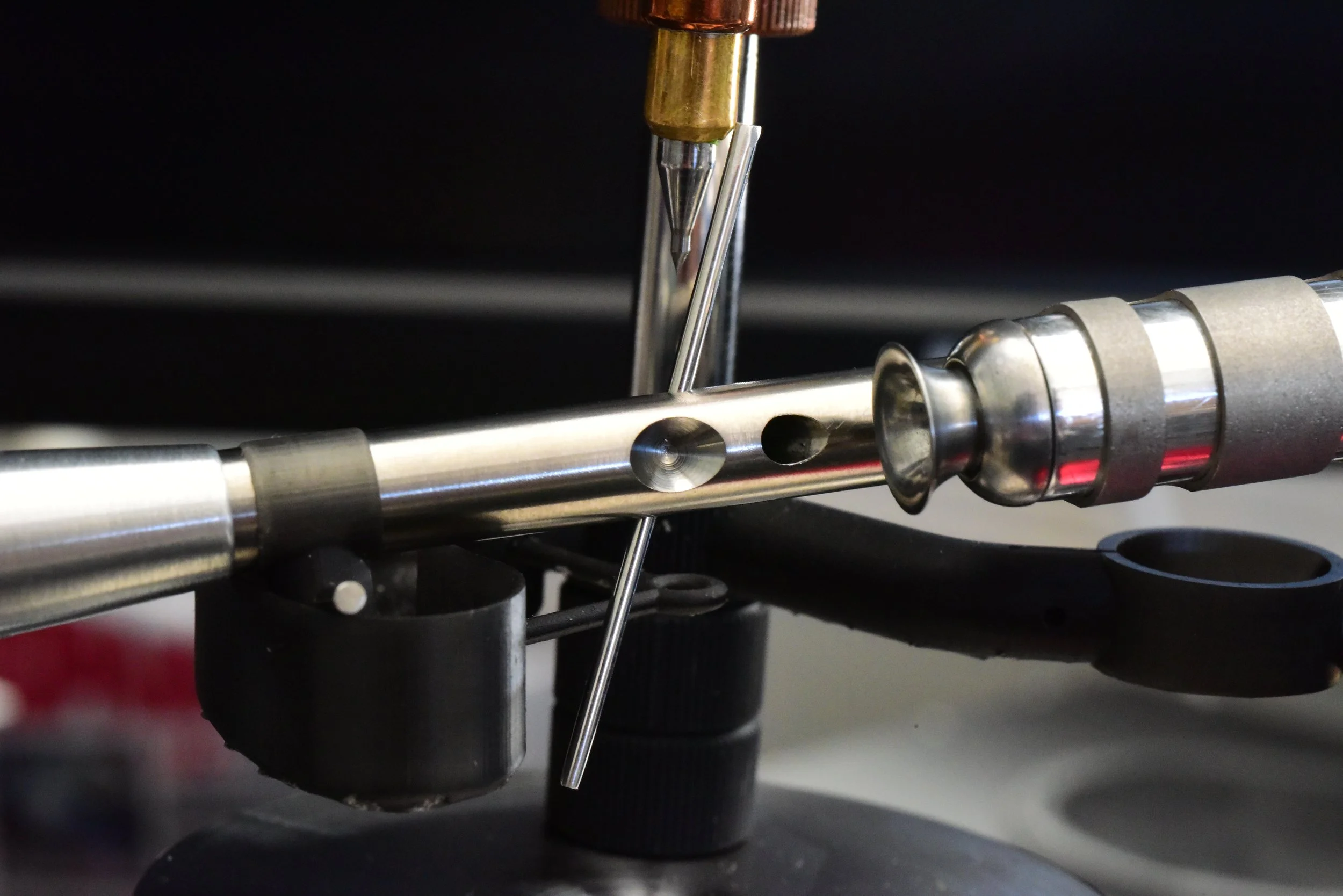
Inverted tungsten unipivot point and titanium connecting rod cup
Every engineering project begins as an idea - a set of objectives balanced against the finite laws of physics. When I set out to design this tonearm, I had a clear set of objectives in mind: best-in-class quality, measurable performance improvement, iconic aesthetics, and, above all, the primary mission of delivering dynamic azimuth control during playback. Achieving all of those objectives required a disciplined, systems-level engineering methodology capable of simultaneously coordinating decisions across multiple interrelated technical areas.
A Systems Engineering Framework
A tonearm is deceptively complex - simultaneously an electrical circuit, a mechanical structure, an acoustic device, and a visual statement. A systems engineering approach organized my design work across five interrelated domains: material science, electrical engineering, mechanical engineering, acoustics, and industrial design. The real art lies in the arrangement, configuration, and integration of components so that gains in one domain do not adversely affect the others. This multi-domain optimization is inherently iterative, time-consuming, and very expensive. To shorten the cycle, I began with foundational assumptions drawn from established best practices and refined each through continuous prototyping. Actually, the prototyping and design of experiments never stop.
The core design targets formed an interlocking system: a stabilized unipivot bearing; a nine-inch arm (228 mm) effective length; a mechanically rigid arm tube and headshell for cartridge stability; super-low-resistance copper wiring for signal integrity; minimal energy storage in the arm tube; an effective mass of approximately 16 grams to complement the intended cartridge compliance range; and optional fluid damping matched for low-compliance cartridges. Each parameter was chosen not in isolation but with full awareness that changing any single variable will impact other parts of the system.
Guiding Design Principles
Behind every engineering decision sat a set of strict principles. Effective mass had to complement cartridge compliance to keep the resonant frequency in the ideal range. The bearing had to permit real-time azimuth mechanical adjustment while eliminating the radial-axis instability that plagues traditional unipivots, especially on tracks with deep bass and high modulation. Rigidity throughout the arm was essential for cartridge stability. Energy storage in the arm tube had to be minimized - stored energy means delayed, smeared vibration release, the enemy of transient accuracy. The electrical path had to offer the lowest possible resistance. Environmentally sensitive materials like wood were excluded from mechanical parts in favor of long-term dimensional stability. And the finished arm had to deliver setting stability with virtually no maintenance or recalibration.
From CAD to Reality: Rapid Prototyping

This project would have been financially impossible without two critical tools: a high resolution 3D resin printer (like the Elegoo Saturn 2) and SolidWorks CAD software. Teaching myself SolidWorks was not easy, but was one of the most consequential investments I made. Together, these tools compressed the path from imagination to a testable physical prototype down to hours. Design updates that would have required weeks through a traditional machine shop became near-instantaneous and essentially free. By my estimate, the cumulative cost savings exceeded $100,000.
Dimensional precision is standardized to three decimal places for CNC-machined components and five decimal places for CAD files. Beyond that, returns diminish rapidly; the goal is precision that matters without chasing tolerances that cannot be reliably held or meaningfully measured.
The Hardest Problem: Stabilized Unipivot with Dynamic Azimuth
The project’s defining engineering challenge was mechanically stabilizing the unipivot bearing and iIt had to accomplish two things simultaneously: permit real-time azimuth adjustment during playback and eliminate the radial-axis instability inherent in traditional unipivot designs. Without radial stability, demanding tracks with deep bass and high stylus excursion produce compromised low-frequency reproduction and degraded stereo imaging. Solving this azimuth puzzle required a lot of design iterations and is the single engineering element that really distinguishes this tonearm from all others.
Form and Function: Why Aesthetics Matter
I have always believed the job is never finished if the finished product is hard to look at. Engineering performance is the primary objective - if the arm doesn’t work, appearance doesn’t matter. But creating a genuinely iconic product can be every bit as challenging. Consider Apple’s design aesthetics under Jony Ive: precise, clean, minimalist, and unmistakably Apple. Those designs proved that uncompromising engineering and striking aesthetics are complementary, not competing, goals. That same design philosophy guides this project from counterweight to headshell.
Lessons from the Machine Shop
My years of development work have culminated in a few enduring hobby dogma principles worth repeating here: keep multiple spare parts on hand, because experimenting and testing components inevitably will break (it’s part of the process). Invest in quality tools - they cost more but make the work go easier and faster. Never go cheap on materials or processes; the outcome reflects the care invested. Practice disciplined project management with clear lists and milestones - staying organized will get the product delivered on time. And embrace a productive obsessiveness about precision, quality, and customer experience - because that is what separates an average product from an exceptional product.
With this engineering philosophy, the design validated, and the prototyping complete, the work is far from finished. Improvement is continuous, and I am rarely content to leave well enough alone.